
Navigating the different types of cremation services can feel confusing. Having been deeply rooted in the death care industry my entire life, I’ve naturally become well-versed in this topic. When my husband, a funeral director with over 35 years of experience, and I gather with my extended relatives, we often find ourselves fielding questions about funerals.
By extended family, I mean a large, close-knit group—one my grandparents would undoubtedly be proud of. If they were still with us, they’d surely marvel at how their seven children, along with 75 grandchildren, great-grandchildren, and great-great-grandchildren, maintain such a strong bond, regularly coming together to enjoy each other’s company.
A couple of years ago, what started as a casual side conversation about cremation between my uncle, my husband, and me quickly grew into a larger discussion. It didn’t take long before nearly 20 family members had crowded into a small dining room, asking thoughtful questions about planning cremation services. It became clear that some had hesitated to ask such questions before, while others felt they should have already known the answers.
This was an eye-opening experience that compelled me to write about the different types of cremation services to help families navigate the sometimes complex landscape of end-of-life planning. Through this blog, I also hope to foster a better understanding of cremation service options and address any misconceptions.
What is a Cremation Service?
A cremation service is a ceremony or gathering held to honor and remember a loved one. Similar to a conventional service, it is specifically for someone who will be cremated rather than buried in a customary manner. The service can take place either before or after the cremation.
6 Different Types of Cremation Services
Let’s look at 6 different types of cremation services and the features of each type of service.
Traditional Cremation Services

A traditional cremation offers a dignified and respectful way to say farewell to a loved one while providing a sense of closure and the opportunity to grieve collectively. The services include a visitation, followed by a funeral, either immediately afterward or the next day.
The funeral home is responsible for preparing the body for viewing, which entails setting features, embalming, and casketing the body. Families are asked to gather photographs as well as other memorabilia to display at the services.
During the visitation, community members pay their respects and offer condolences to the bereaved. The funeral service that follows is led by a clergy member, celebrant, or officiant, and usually includes readings, eulogies, and music that reflects the individuality of the departed and the values they held dear.
In short, a traditional cremation service will have the same look and feel as a traditional funeral. The only real difference is that the body is cremated after the service.
Graveside Service
A graveside service can be held when a loved one’s cremated remains will be laid to rest in a cemetery. This intimate gathering allows family and friends to come together to pay their respects one final time.
The ceremony often includes the symbolic act of interring the urn, providing a moment of reflection and peace. Following the service, attendees can participate in additional gestures, such as placing flowers at the site or simply spending a quiet moment at the grave.
Memorial Service

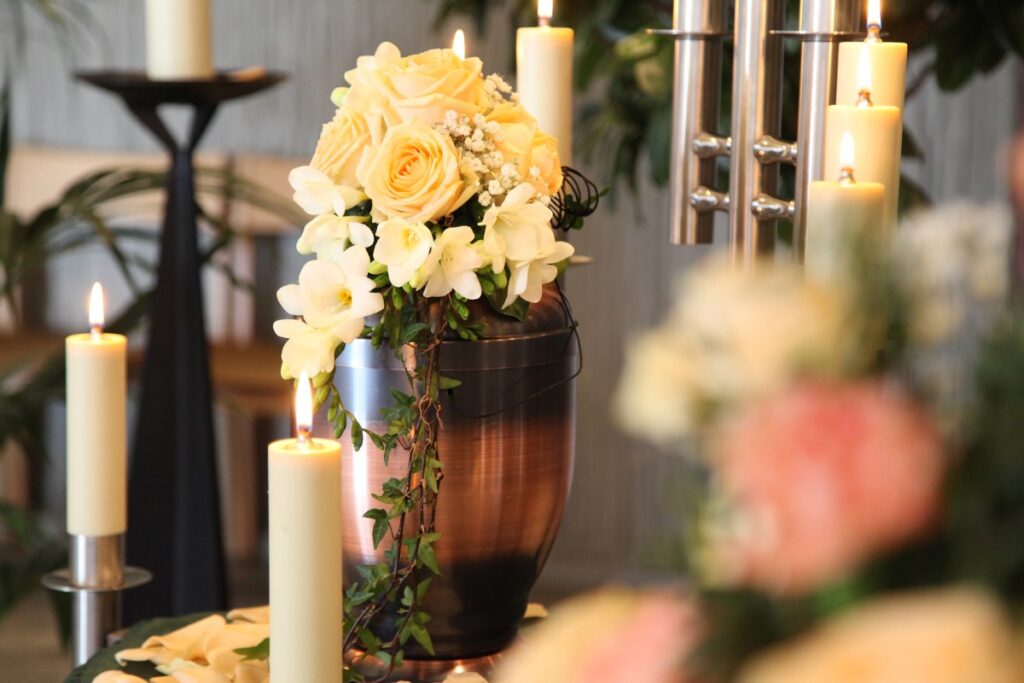
A memorial service differs from a traditional funeral service in that the full body is not present. Instead, a framed photo and an urn housing the cremated remains typically assume a central role, representing the memory and essence of the departed individual.
Similar to a visitation, pictures and mementos that pay tribute to the life and legacy of the deceased are displayed. Depending on the ambience, guests may have the opportunity to enjoy appetizers, drinks, and live music while finding solace and support in one another amidst their grief.
Many families opt for memorial services because they can be scheduled within a few days after their loved one’s passing or at a later date to accommodate various circumstances and preferences. While most memorial services take place at a funeral home, they can be held at an offsite location, such as a place of worship or reception hall, with the assistance of the funeral director.
Celebration of Life Cremation Service

A celebration of life service is a modern approach to memorialization that focuses on commemorating the life and legacy of a loved one, rather than solely mourning their loss. It is designed to be a more joyous and uplifting occasion that reflects the individual’s personality, passions, and achievements.
Unlike a traditional funeral, which follows a strict format, a celebration of life is more flexible and includes a variety of personalized elements. It can be informal, reflecting the individual’s easy going nature, or it can be structured with planned speeches, readings, and music. Attendees may be asked to share stories and memories to strengthen the connection among those present.
The deceased’s favorite colors, hobbies, and interests are often incorporated into the theme of the event. Photos and videos of the person’s life journey are displayed as well. Some families even hand out a keepsake to each guest as a tangible memory of their loved one.
Witnessed Cremation
A witnessed cremation service allows close family and friends to observe the body being transferred into the crematorium. Those present may choose to leave once the process begins or stay until it is complete.
This practice is more common in certain cultures or religions and may include rites or prayers, which can help provide closure. It’s important to note that policies for witnessed cremation vary between crematories.
Direct Cremation (Without Memorialization)

Direct cremation offers a simple and cost-effective alternative to the traditional cremation process that does not include a formal remembrance service.
This basic option involves the prompt cremation of the unembalmed body soon after the passing of a loved one. Subsequently, the ashes are respectfully returned to the family, granting them the flexibility to decide on their preferred manner of disposition, be it cemetery interment, scattering in a meaningful location, or home placement.
The decision to choose direct cremation does not preclude the opportunity for a later memorial service or celebration of life. Funeral homes can help families organize a gathering at a more convenient time, allowing friends and relatives to honor and remember the life lived.
Final Thoughts
Throughout the years, I’ve witnessed how cremation services have brought comfort and healing to grieving families in unique and profound ways.
I am thankful for the open and transparent conversation with my extended family, which inspired me to write this blog. My hope is that more families have the courage to engage in such conversations, discussing their preferences and the wishes of their loved ones.
At Sunset, we understand the diverse needs of families during times of loss and are committed to accommodating their wishes with many different types of cremation services. Whether opting for a traditional approach or direct cremation, each service can be thoughtfully tailored to honor the departed in a meaningful and personalized way.
