

In the days following a funeral or memorial service, life slowly begins to shift back into motion. During this time of transition, one meaningful task to make time for, if possible, is expressing written thanks to those who showed their support—whether they sent flowers, contributed to a memorial fund, prepared meals, or lent a helping hand.
Although sitting down to write thank you notes may feel like a big undertaking at first, many families discover it can be a comforting process. Putting gratitude into words not only acknowledges others’ kindness but also serves as a quiet way to honor a loved one’s memory.
In this guide, we’ll provide tips for writing a thank you note after a funeral or cremation service, along with different ways you can share your appreciation. As you read, keep in mind—there’s no single “right” way to do this. Funeral thank you etiquette is flexible, and the style and timing are entirely up to you.
Funeral Home-Provided Thank You Cards
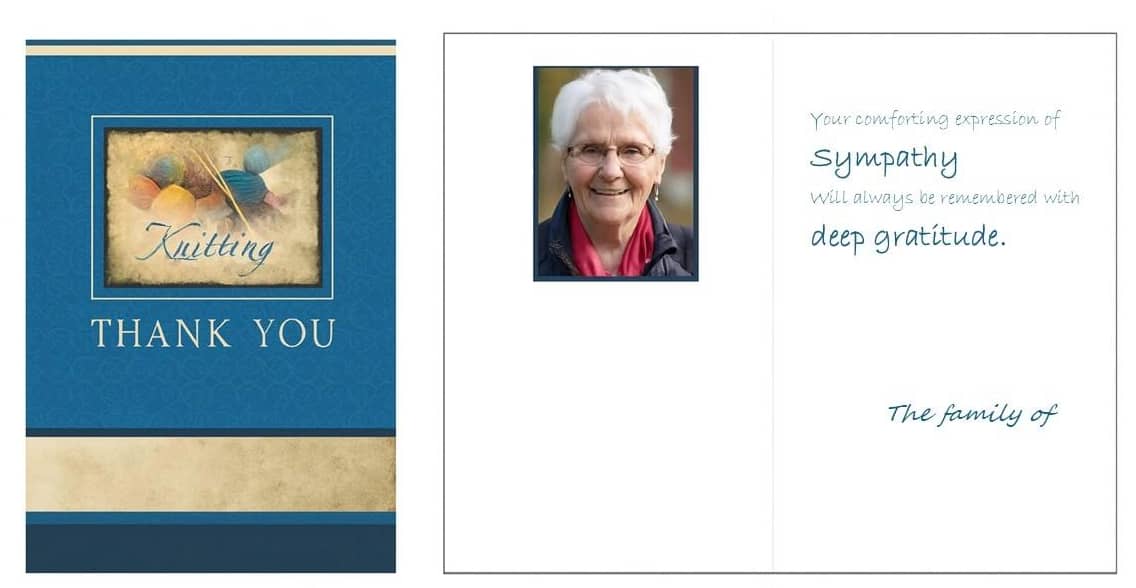
Many funeral homes offer semi-customizable thank you cards—either as individual add-ons or as part of a matching stationery set that might also include a guest register book, service programs, prayer cards, and more.
Families can browse from a selection of designs and pre-written messages, choosing something that feels most in tune with their loved one’s spirit and individuality. Most cards can be personalized with a loved one’s photo and meaningful details from their life.
Inside, there’s typically room for a brief note and a signature, either with your name or “The Family of [deceased’s first and last name].” A simple signature is perfectly fine, but penning a sentence or two adds a touch of warmth.
Here are a few examples for inspiration:
- “We’re deeply grateful for your donation to [charity] in [name]’s memory. This cause was close to their heart, and your generosity means so much.”
- “Thank you for the lovely flower arrangement you sent to the service. It brought a bit of brightness to the day and continued to lift our spirits afterward.”
- “Your delicious lasagna after the Celebration of Life was a true gift of care and friendship.”
Sympathy Acknowledgement Cards

Families may also choose store-bought sympathy acknowledgement cards, which come in a wide variety of styles and leave ample space for personal words.
Options range from greeting cards with pre-written sentiments to blank notes that provide a canvas for longer messages. You can also find fully customizable cards available online or through the funeral home, allowing you to add photos, quotes, or other special details.
Some families choose to send a funeral home–provided card right away, then follow up later with a second note that’s more personal. This approach allows you to acknowledge the support quickly, while also giving yourself the time and space to write a more personal message when the time feels right.
How to Structure the Note

Those looking to write a longer, more detailed thank you note might find it beneficial to follow a basic guideline like the one below.
1. Begin with recognition and thanks.
Address the person or group and open with a sentence of gratitude. For example:
“We will always remember your compassion during this difficult time.”
2. Acknowledge their specific gesture.
Mention what they did—whether they traveled, made a donation, or brought food—and how it touched you. You might say they lifted your spirits or gave you strength when you needed it most.
3. Highlight the connection.
Include a short memory or share how their relationship brought joy, love, or happiness into your loved one’s life.
4. Conclude with a heartfelt closing.
Reiterate your thanks and leave them with a gracious sentiment such as:
“Your empathy has made this journey more bearable, and we are heartened by your care and concern.”
Sign your name, or if writing on behalf of your entire family, consider something like:
“With love and appreciation, The Smith Family”.
Who Should Receive a Thank You Note?
Although it’s not necessary to mail a formal note to everyone who attended the service or sent a card, it is considerate to thank those who:
- Sent flowers, planters, wind chimes, or other sympathy gifts to the memorial service, funeral or family home
- Donated to a cause on behalf of the loved one’s memory
- Helped with final expenses
- Participated in the service or gathering (such as pallbearers, musicians, eulogists, etc.)
- Officiated or led the service
- Traveled long distances to attend
- Brought meals or organized food for the family
- Assisted with childcare, pet care, errands, or housework
- Funeral home or cemetery staff members who went the extra mile
A Step Toward Healing
Writing thank you notes after a funeral is far more than a formality—it’s a chance to pause, remember, and hold close the moments of support that carried you through the hardest days. It can be a small step toward healing, offering both a sense of closure and a renewed connection to those who stood by you.
If you’ve found your way to this article because you’ve recently lost someone dear, please accept my deepest condolences. May these tips help you find the right words, and may the act of writing them bring a measure of peace as you navigate the road ahead.
